Mobile Optometrist
QLD & NSW — At Your Address
Aged Care, In-Home & Workplace Eye Tests
Bulk-billed Medicare visits at your address — Professional, Compassionate & Convenient
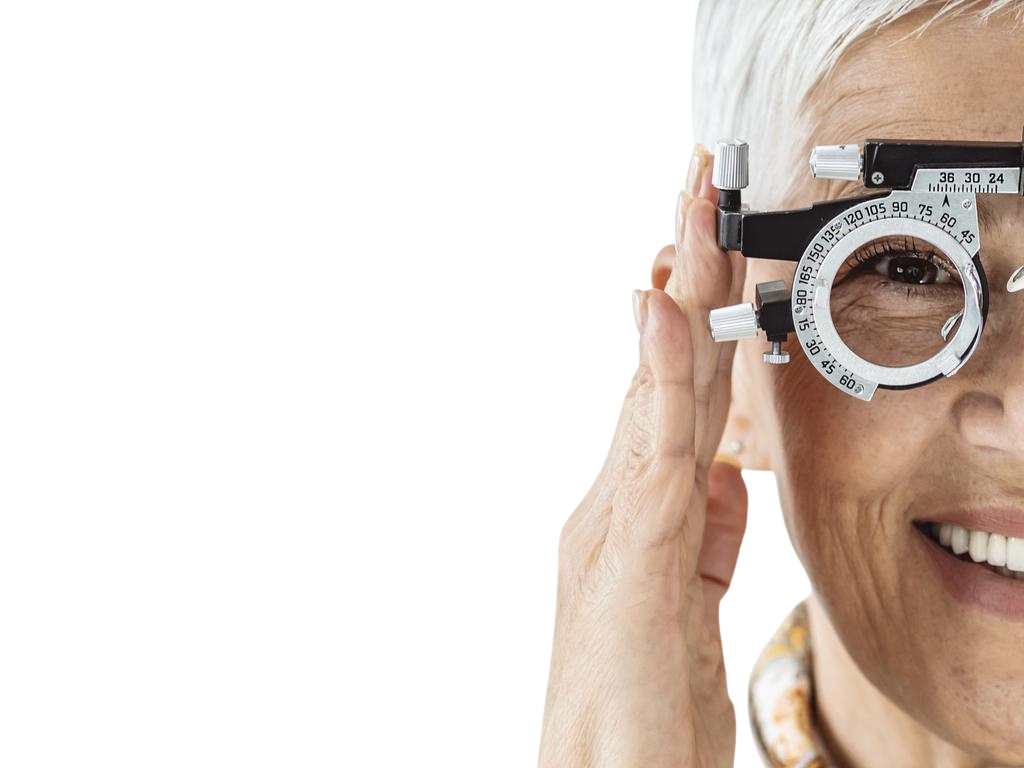
What is a Mobile Optometrist?
A mobile optometrist is a qualified, AHPRA-registered eye care professional who brings complete eye examination equipment directly to your address — whether that's an aged care facility, a private home, a post-operative recovery setting, or a workplace. Instead of you travelling to a clinic, we come to you.
We deliver the same comprehensive examination you'd receive in a high street optometry practice — visual acuity, refraction, retinal photography, glaucoma screening and more — across four settings:
Aged Care Visits
Scheduled on-site optometry for nursing homes, residential care and retirement villages.
In-Home Eye Tests
For older Australians, people with limited mobility, or anyone who finds clinic visits difficult.
Post-Operative Visits
At-home post-cataract follow-up refractions and updated glasses dispensing.
Corporate Workplace
On-site workplace eye tests for QLD and NSW employers — minimal disruption to shifts.
Our Mission
To make quality eye care accessible to every Australian — at home, in aged care, after surgery, or at work — so that getting your eyes tested no longer depends on getting to a clinic.
Our Mobile Optometry Services
Comprehensive eye care delivered directly to your aged care facility, home, post-operative setting or workplace across Queensland and New South Wales.
In-Home Eye Tests
Bulk-billed Medicare eye examinations at private homes — for older Australians, people with limited mobility, and anyone who finds clinic visits difficult.
- Comprehensive examination at home
- Digital retinal photography
- Glasses dispensed on-site
- Written report to your GP
- Bulk-billed Medicare visits
Aged Care Facility Visits
Scheduled on-site optometry for nursing homes, residential aged care and retirement villages. Bedside examinations and dementia-friendly protocols.
- Cataract, glaucoma, macular degeneration and diabetic screening
- Bedside examinations
- Dementia-trained optometrists
- Reports to care managers and POA
- Aged Care Quality Standards compatible
Post-Operative Home Visits
At-home post-cataract follow-up refractions and updated glasses dispensing for patients recovering from eye surgery.
- Post-cataract refraction
- New prescription glasses on-site
- Coordination with your ophthalmologist
- Recovery-friendly home appointments
- Bulk-billed for eligible patients
Corporate Workplace Eye Tests
On-site workplace eye tests for QLD and NSW employers — minimal disruption to shifts. WHS and safety-glasses scripts available.
- Group bookings on-site
- Computer/screen vision assessment
- WHS and safety-glasses scripts
- Minimal disruption to shifts
- Single invoice to employer
Trusted by Communities Across Australia
We're the trusted mobile optometry choice across aged care, in-home and workplace settings — serving aged care facilities, older Australians at home, post-op patients and workplaces across Queensland and New South Wales. Bulk-billed Medicare visits, AHPRA-registered, genuine care.
Why Choose a Mobile Optometrist?
Mobile optometry brings professional eye care directly to your address — home, aged care, post-op recovery or workplace — with benefits for patients, families, carers and employers.
We Come To You
Examinations at your aged care facility, home, post-op recovery setting or workplace — no transport, no waiting rooms.
Bulk-Billed Through Medicare
The comprehensive eye examination is bulk-billed for eligible patients across all settings — glasses and optional extras are charged separately. We handle all Medicare billing directly.
Cognitive Health Support
Vision correction reduces dementia progression risk by up to 30% — important for aged care residents and older Australians at home.
Falls Prevention
Proper vision care reduces fall risk by up to 67%. A critical safety intervention for aged care residents and in-home patients.
Trained for Every Setting
Our AHPRA-registered optometrists are experienced with dementia, in-home care, post-op recovery and workplace screening.
Clinical-Grade Equipment
Portable digital retinal cameras and visual field analysers — same diagnostic quality as a clinic.
Mobile Optometry Service Areas
We provide aged care, in-home and workplace on-site eye tests across Queensland and New South Wales. Find a mobile optometrist Brisbane, mobile optometrist Sydney, mobile optometrist Gold Coast, and more locations across Queensland and New South Wales.
Looking To Book A Visit?
Schedule your on-site eye care appointment today. Professional, convenient, and comprehensive eye care services with no cost to the facility—examinations are bulk-billed through Medicare.
Mobile optometry across Australia — the long read
A mobile optometrist is an AHPRA-registered eye care professional who delivers comprehensive, clinic-grade eye examinations at a patient's address rather than asking the patient to attend a high-street clinic. In Australia, mobile optometry has grown rapidly over the last decade as the population has aged, residential aged care has expanded, and the burden of preventable vision loss in older Australians has become impossible to ignore. Eye See You Optometry was founded specifically to close that gap — to bring the same standard of comprehensive eye care that a younger, mobile patient takes for granted to the bedside of an older Australian who cannot easily leave home.
Across Queensland and New South Wales we operate a fleet of fully-kitted mobile optometry teams. Each team carries a portable slit lamp, hand-held non-contact tonometer, autorefractor, digital fundus camera, trial-lens kit, hand-held LogMAR acuity charts and a range of frame options. The clinical examination delivered at a patient's bedside or kitchen table is identical in scope to the examination that would be performed in a clinic — visual acuity, refraction, ocular health assessment, intraocular pressure measurement, anterior-segment examination, dilated or undilated fundus imaging where indicated, and a structured discussion of findings with the patient, their family or POA, and (in facility settings) the registered nurse in charge.
Why mobile optometry matters in Australia
The Australian Institute of Health and Welfare reports that more than half of all Australians aged 75 and over live with at least one form of correctable or treatable vision impairment. The most common causes — uncorrected refractive error, cataract, age-related macular degeneration, glaucoma and diabetic retinopathy — are all conditions that respond extremely well to early detection and consistent monitoring. Yet the residents most likely to develop these conditions are also the residents least likely to attend a clinic, because mobility limitations, cognitive change, transport difficulties or simple frailty get in the way. Mobile optometry directly removes those barriers. When the optometrist comes to the patient, the patient does not skip the appointment because nobody could drive them, the dementia behaviours do not escalate in an unfamiliar waiting room, and the bed-bound resident is not excluded from eye care just because they cannot transfer to a chair.
What to expect during a mobile optometrist visit
Most patients are surprised at how complete a mobile examination is. Allow about 20 to 30 minutes per patient for a standard comprehensive examination, and 35 to 45 minutes where the patient has dementia, complex medical history, or can only be assessed at the bedside. The optometrist will typically begin with a brief history — current symptoms, last eye examination, general health and medications — and then move through visual acuity, refraction (we use both subjective refraction and objective autorefraction/retinoscopy so we are not solely reliant on a patient being able to read a chart), pupil and ocular motility testing, intraocular pressure measurement using a hand-held non-contact tonometer, anterior-segment slit-lamp examination, and digital retinal imaging. Findings are explained in plain language at the time, and a written report is provided afterwards. For a step-by-step walkthrough written specifically for first-time bookers, see Booking your first mobile optometrist visit: what to expect, and for a side-by-side comparison with the clinic model, see Mobile optometrist vs clinic optometrist.
For aged care facility visits, we also coordinate with the facility's clinical team. Before the visit, we confirm consent status for each resident on the visit list, flag any residents who require POA contact prior to dispensing glasses, and review medication lists for systemic conditions (diabetes, hypertension, anticholinergics) that change what we look for during the examination. After the visit, a batch summary is supplied to the registered nurse in charge, individual reports go to the resident's GP, and POA or family members receive a copy where applicable. Where a referral to ophthalmology is indicated — for example, visually significant cataract, suspicious optic disc cupping, neovascular age-related macular degeneration, or proliferative diabetic retinopathy — we issue a formal written referral on the same day and follow up to confirm the appointment has been booked.
After the visit — reports, glasses, and continuity of care
The clinical examination is only half of what mobile optometry delivers; equally important is the documentation and follow-through that makes the visit useful to the wider care team. Within 48 hours of every visit, the patient (or their POA) receives a clearly-written report covering the examination findings, the prescription, any treatment recommendations, and the date by which the next examination should occur. A copy goes to the treating GP for inclusion in the patient's general medical record, and — for facility residents — a second copy goes to the facility's clinical record. Where new glasses have been prescribed, we measure on-site, dispense from a range of durable frames suited to older wearers (lighter weight, larger nose pads, spring hinges where appropriate), and deliver the finished glasses to the visit address within 10 working days. There is no second appointment required for the patient to "come and collect" their glasses; we bring them back and fit them on-site. In facility settings, dispensing is paired with a robust labelling and inventory workflow — see Spectacle loss in aged care: prevention and replacement for the full protocol we use.
Continuity of care is one of the most important advantages of a regular mobile optometry program. Because the same provider sees the same residents or in-home patients on a predictable schedule (typically annually, or six-monthly for patients with diabetes, glaucoma, macular disease or recent cataract surgery), changes over time are detected far earlier than they would be under an ad-hoc clinic-visit model. A 0.50 dioptre myopic shift that signals cataract progression, a small new haemorrhage at the retinal arcade that signals worsening diabetic retinopathy, a quietly rising intraocular pressure that signals glaucoma drift — all of these are the kinds of subtle longitudinal changes that get picked up only when the same clinician has examined the same eye twelve months earlier.
Choosing a mobile optometrist
Not all mobile optometry providers operate to the same standard, and the easiest way to compare providers is to ask a small number of structured questions. Our companion guides — What does a mobile optometrist actually do? and How much does a mobile optometrist cost? — cover scope and pricing in plain language; for facility procurement, see the vendor-neutral checklist for choosing an aged care optometrist. First, who actually performs the examination? Every clinician attending a visit should hold current AHPRA registration as an optometrist, current professional indemnity insurance, and a current National Police Check. Ask to see the documentation. Second, what equipment is brought to the visit? A genuine comprehensive examination requires a portable slit lamp, hand-held tonometer, autorefractor and digital retinal camera; "torch and a wall chart" is not comprehensive care. Third, what is the reporting workflow? Reports should go to the patient, the GP, and (where applicable) the POA or facility within a defined time after the visit. Fourth, how does the provider handle ophthalmology referrals? The answer should describe formal written referral with copy to GP, and follow-up confirmation that the appointment has been booked.
You should also ask about the provider's experience with the specific population you need served. Aged care facility optometry, in-home optometry for housebound patients, post-operative cataract follow-up at home, and corporate workplace eye tests all share underlying clinical fundamentals but each has distinctive logistics and consent workflows. A provider who is genuinely strong across all four (rather than retrofitting an in-home model onto facility work) will be able to describe those workflow differences in detail without prompting.
Why we positioned ourselves as a national mobile optometry pillar
This page sits alongside our dedicated aged care optometrist pillar. The two pillars exist because mobile optometry is genuinely a multi-setting service — older Australians live in their own homes, in retirement villages, in residential aged care, and (for an increasing minority) continue working into their seventies or beyond. Each setting has its own clinical and logistical considerations. By giving each pillar its own page we can go deep on the things that genuinely matter to that audience (facility compliance, family communication, dementia-friendly protocols, etc.) without overwhelming the reader with material that isn't relevant to their situation.
For aged-care specific operational detail — Aged Care Quality Standards 3 and 5 alignment, bedside refraction protocols, dementia-friendly examination accommodations, Medicare optometry item-number guidance, and POA reporting workflows — see the dedicated aged care optometrist pillar. For service-mode landing pages see aged care visits, in-home optometry, post-operative home visits and corporate workplace eye tests.
State Coverage Across Australia
Our mobile optometrists service every metropolitan, regional and remote location in the cities listed below. State hubs index the full footprint.
For RACFs in particular, see our dedicated aged care optometrist pillar.
How a Mobile Optometrist Visit Works
From first call to final report — five steps.
- 1
Choose your setting
Identify whether the visit is for an aged care facility, private home, post-operative recovery or a workplace. Each setting has a slightly different consent and scheduling workflow — we handle the differences.
- 2
Submit a booking
Call 0490 090 713 or complete the booking form with location, contact details and preferred dates. We respond on the same business day.
- 3
Confirm logistics
We confirm the schedule, supply compliance documentation (AHPRA registration, Police Check, professional indemnity) for facility visits, and coordinate consent for in-home patients.
- 4
On-site examination
An AHPRA-registered optometrist attends with portable slit lamp, autorefractor, retinal camera and tonometer. The full examination is completed at your address.
- 5
Reports and glasses
Written reports issued to the patient, POA or family, and GP. New glasses dispensed to the visit address within 10 working days where required.
Medicare Bulk Billing
Comprehensive mobile optometrist examinations are bulk billed direct to Medicare for eligible patients — there is no out-of-pocket cost for the clinical service. The optometrist applies the appropriate Medicare Benefits Schedule (MBS) optometry item number for each consultation (initial comprehensive, subsequent comprehensive, or shorter-interval item where the patient has diabetes, glaucoma, macular disease or recent cataract surgery).
For aged care facilities the bulk-billed model removes any clinical-service cost to the facility itself. For in-home patients there is no out-of-pocket cost for the eye examination. Optional glasses, contact lenses and non-Medicare extras are billed separately with prior consent at transparent published pricing.
Full Medicare item detail and aged-care-specific billing notes live on our aged care optometrist page.
Mobile Optometrist vs Clinic vs GP Referral
How a mobile optometrist visit compares to the two main alternatives for getting older Australians' eyes tested.
| Factor | Mobile optometrist (us) | High-street clinic | GP referral to ophthalmology |
|---|---|---|---|
| Travel required | None — we come to you | Patient travels to clinic | Patient travels to specialist rooms |
| Suitable for bed-bound patient | Yes (bedside refraction) | No | Rarely |
| Suitable for dementia | Yes — objective testing, familiar room | Variable — depends on facility | Difficult — unfamiliar environment |
| Bulk-billed Medicare | Yes (eligible patients) | Varies by clinic | Usually with referral, gap fees common |
| Waiting time | Days to a few weeks | Days to weeks | Weeks to months |
| Glasses dispensed on-site | Yes (delivered to address) | Yes (collected from clinic) | No (separate optometry visit) |
| Reports to POA / family / GP | Standard | On request | Standard (clinical letter) |
| AHPRA registered optometrist | Yes | Yes | Ophthalmologist (medical) |
Mobile Optometrist — FAQs
Fifteen of the most common questions we're asked about mobile optometry in Australia.
What is a mobile optometrist?
A mobile optometrist is an AHPRA-registered eye care professional who brings full diagnostic equipment to your address — home, aged care facility, post-operative recovery setting or workplace — and delivers the same comprehensive examination you would receive in a high-street clinic.
Do mobile optometrists bulk bill Medicare?
Yes. Comprehensive eye examinations are bulk billed direct to Medicare for eligible patients across QLD and NSW, with no out-of-pocket cost for the clinical service.
What areas do you cover?
We service every metropolitan, regional and remote location across Queensland (Brisbane, Gold Coast, Sunshine Coast, Toowoomba, Cairns, Townsville, Rockhampton, Mackay, Bundaberg, Hervey Bay, Ipswich and more) and New South Wales (Sydney, Newcastle, Coffs Harbour, Port Macquarie, Tamworth, Lismore, Byron Bay, Armidale, Maitland, Tweed Heads).
How do I book a mobile optometrist visit?
Call 0490 090 713 or submit our online booking form with your address, contact details and preferred dates. We respond on the same business day.
What equipment do you bring?
Portable slit lamp, hand-held non-contact tonometer, autorefractor, digital retinal camera, trial lens kit, hand-held LogMAR acuity charts and frame range — the full clinic-equivalent kit.
Can you examine bed-bound patients?
Yes. Our optometrists are equipped and trained to perform bedside refraction, retinoscopy and retinal imaging on patients who cannot sit upright or transfer to a chair.
Can you examine patients with dementia?
Yes. We use objective measurements (retinoscopy, autorefraction, digital retinal imaging, non-contact tonometry) that do not rely on a patient reading a chart, allow extra time, and examine in the patient's familiar room when possible. See our dementia-friendly eye care page.
How long does each examination take?
Allow 20–30 minutes per comprehensive examination, and 35–45 minutes for patients with dementia, complex medical history or bedside-only assessments.
Are you AHPRA registered and police-checked?
Yes. Every optometrist on our team holds current AHPRA registration, professional indemnity insurance, and a current National Police Check. We supply compliance documentation to facilities on request.
Do you dispense glasses on-site?
Yes. Where a new prescription is required we measure on-site, dispense from a range of durable frames, and deliver finished glasses to your address within 10 working days.
How do you handle ophthalmology referrals?
When examination findings warrant ophthalmology review (e.g. visually significant cataract, suspicious optic discs, retinal pathology) we issue a formal written referral to the patient's preferred or local ophthalmologist and copy the GP.
Who receives the examination report?
A written report goes to the patient or POA, with a copy to the treating GP. For aged care visits, a facility batch summary also goes to the registered nurse in charge.
What if my workplace needs employee eye tests?
We deliver bulk on-site eye tests for QLD and NSW employers — screen-use assessments, WHS and safety-glasses scripts, single invoice to the employer. See our corporate eye tests service page.
Do you support post-cataract follow-up at home?
Yes. We perform in-home post-cataract refraction and dispense updated glasses, coordinating with the patient's ophthalmologist. See our post-operative home visits and post-cataract follow-up services.
What's the difference between this page and the aged care optometrist page?
This page is the cross-setting mobile optometry pillar — home, facility, post-op and workplace combined. Our dedicated aged care optometrist page goes deeper on the RACF-specific aspects (Aged Care Quality Standards 3 & 5, bedside protocols, dementia accommodations, POA reporting, Medicare items).
Read next on mobile optometry
Ten in-depth guides covering what we do, what it costs, how to choose a provider, and how visits actually run.